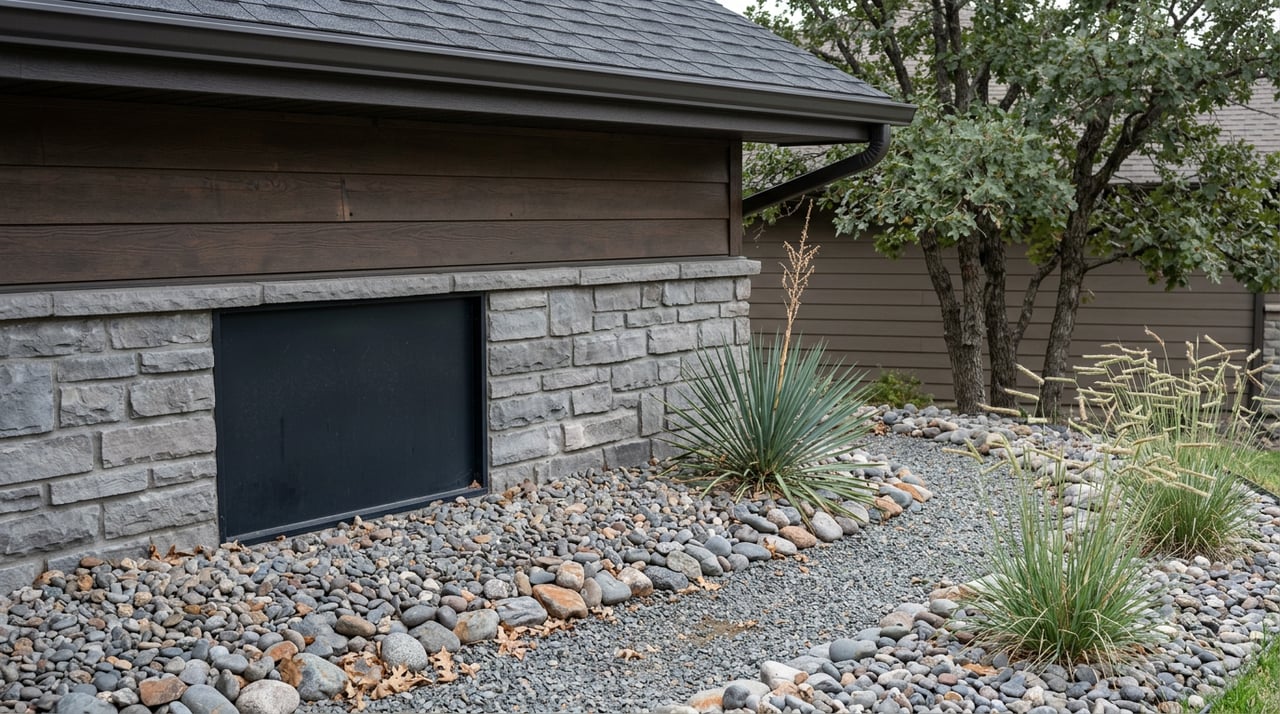
Why Colorado Springs Home Sales Stall on the Calendar, Not the Inspection Report
August 20, 2026
August 20, 2026
Say you go under contract on a house in Colorado Springs on a Tuesday. The general inspection happens that Friday. By the following Tuesday, your Inspection Objection Deadline is already closing in, and now you're holding two reports: a radon reading that came back at 5.2 pCi/L, and an inspector's note about a hairline stair-step crack near the garage that he thinks warrants a second opinion from a structural engineer.
Neither finding is unusual here. Roughly four in ten homes tested in El Paso County over the past two decades have come back above the EPA's action level of 4.0 pCi/L, and the clay under a large share of this city swells and shrinks enough to leave a mark on almost any foundation eventually. What actually threatens the deal isn't that these two things showed up. It's that you now need a structural engineer's opinion, and those typically take a week or more to schedule and deliver, while your entire objection window in a standard Colorado Springs contract runs seven to ten days from the date both parties signed.
That's the piece most guides skip. The hazards themselves are common enough to be background noise in this market. The real risk is running out of contractual runway before you can act on what the inspection found.
Colorado Springs sits where the Pikes Peak massif meets the high plains, and a large share of the developed metro rests on Pierre Shale and related claystone. That clay absorbs water and expands, sometimes by 20 percent or more in volume, with the Colorado Geological Survey putting swell pressures in these formations as high as 30,000 pounds per square foot. A volume increase of just 3 percent is enough to stress a typical residential foundation, which is why single-family homes and lightly loaded buildings like schools show the damage while downtown high-rises with deep, engineered foundations mostly don't. The Colorado Geological Survey has even mapped where this risk concentrates within city limits, in a study called MS-32 that looks specifically at differential heave in steeply dipping bedrock under Colorado Springs.
Radon runs on a parallel track. El Paso County sits in the EPA's highest-risk radon zone, and a meaningful share of the city's housing stock was built during the growth waves tied to Fort Carson, Peterson, Schriever, and the Air Force Academy expanding through the 1980s into the 2010s, much of it with large finished basements. Basements are exactly where radon concentrates, and the long, cold winters here mean homes stay sealed for months while furnaces pull negative pressure that draws soil gas upward through the same cracks the clay soil helped create.
Neither of these numbers describes a defect. They describe the baseline. The question a buyer or seller actually needs answered isn't "could this house have radon or soil movement." It's "do I have enough time on the contract to deal with it if it does."
Every deadline in a standard Colorado contract to buy and sell real estate is calculated from one date: the Mutual Execution date, or MEC, the day both parties have signed. From there, the schedule is tight and specific.
| Milestone | Typical timing from MEC |
|---|---|
| Inspection Objection Deadline | 7 to 10 days |
| Inspection Resolution Deadline | 3 to 5 days after the objection deadline |
| Loan Objection Deadline | 25 to 30 days |
A radon test needs a minimum of 48 hours to run, and most real estate tests take 2 to 5 days once you account for setup and read time, which is why the smart move is booking the radon monitor the same day you schedule the general inspection rather than waiting to see if the inspector recommends it. If the result lands after your objection deadline has already passed, you've lost your cleanest opportunity to negotiate.
Foundation questions move even slower. A standard structural engineer's report can take a week or more to complete, which by itself can eat most or all of a 7 to 10 day objection window. Some inspection firms in the area now offer expedited 48-hour foundation evaluations specifically to keep pace with that deadline, which tells you how often the standard timeline and the standard report length don't line up on their own.
None of this is a legal requirement. Home inspections aren't mandated in Colorado. But the inspection objection deadline is the buyer's cleanest chance to renegotiate or walk away, and both radon and foundation questions are common enough here that treating the schedule as an afterthought is where deals actually get into trouble.
Radon has its own dedicated statute. Colorado Senate Bill 23-206 took effect in 2023 and converted radon disclosure from a suggestion into a contract requirement. Every residential sales contract now has to include a bold, state-mandated warning statement, and sellers must share any known radon test history, including results below the 4.0 pCi/L threshold, along with information about any mitigation system already installed. If a home already has a mitigation system, the paperwork trail, the original test, the post-mitigation test, the installer's invoice, matters almost as much as the system itself, since mitigation systems should be retested roughly every two years and a buyer's own test on an undocumented system can reopen a question that was already settled.
Foundation and soil issues don't have a dedicated statute in the same way. They fall under the general obligation to disclose known material defects on the state's Seller's Property Disclosure form. That's a lower bar procedurally, but it puts more weight on documentation. A seller who has a baseline structural evaluation on file, even one that simply confirms the home is behaving normally for its age and soil type, is in a stronger position than one who has never looked.
For new construction, this cuts differently. The Pikes Peak Regional Building Department requires a geotechnical report for most commercial and multi-family projects, and for single-family homes a soils report is strongly recommended and often required by lenders in areas mapped as high swell potential. But rapid build-out in newer communities like Wolf Ranch, Banning Lewis Ranch, and Meridian Ranch means even brand-new homes are still settling during their first several years, and a house built quickly isn't the same as a house built carefully.
Southwest Colorado Springs, closer to the foothills, sees expansive soil questions come up often enough that local inspectors flag it as a standard watch item. The Old North End, with its Victorian-era housing stock from the late 1800s and early 1900s, carries a different set of considerations: original wiring, older plumbing, and additions of varying quality layered on top of a foundation that's had over a century to move. Newer southeast neighborhoods like Trails at Aspen Ridge sit on the same regional clay but come with a different question, whether cracking is normal post-construction settlement or something that needs a closer look.
None of this means one part of the city is a better or worse place to buy. It means the specific question worth asking changes depending on when and where a house was built, and a buyer who knows which question to ask walks into the inspection period with a plan instead of a scramble.
A few things are worth handling before the clock starts rather than during it.
Is a home inspection legally required in Colorado? No. But the inspection objection deadline in the standard contract is the buyer's main opportunity to renegotiate or walk away based on the home's condition, which is why nearly every buyer and agent treats it as essential.
Who pays for the radon test? Under the standard Colorado contract, the buyer generally pays for inspections, including radon testing, at their own expense. Whether the seller pays for mitigation afterward is a separate negotiation.
Does a home with an existing radon mitigation system still need to be tested? Yes. Mitigation systems should be retested roughly every two years to confirm they're still functioning, and a buyer's own test is common even on a home that already has a system installed.
Does living farther from the foothills mean less soil risk? Not necessarily. The clay formations behind expansive soil in Colorado Springs run through a large share of the metro area, not just the neighborhoods closest to the mountains, which is part of why a site-specific evaluation matters more than a general assumption about which part of town you're in.
If you're weighing a sale in Colorado Springs, or you're under contract right now and trying to figure out whether your timeline has enough room in it, Blue Magnolia Homes can help you map the calendar before it maps you. Let's Connect.
Stay up to date on the latest real estate trends.
Get assistance in determining the current property value, crafting a competitive offer, writing and negotiating a contract, and much more. Contact me today.
GET IN TOUCH TO LEARN MORE

CHRISTINE WHITE
385 CORPORATE DR STE 301 COLORADO SPRINGS, CO 80919