Selling in Woodland Park This Year? Your Wildfire Paperwork Just Became Part of the Deal
August 13, 2026
August 13, 2026
A buyer's agent calls before the first showing and asks a question sellers in Woodland Park have rarely heard before: can you send over your wildfire risk score. Not your home inspection. Not your seller's disclosure. Your insurer's written risk score, the internal number that has quietly driven your premium for years and that, until this July, no Colorado homeowner had a legal right to even see.
That conversation is new for 2026, and it changes what "getting ready to list" means for anyone selling in Teller County's wildland-urban interface. The mitigation work you did after the last hailstorm, the defensible space you cleared around the deck, the metal roof you put on three summers ago, all of it just went from a private safety decision to a piece of paperwork a buyer can request and an insurer is now required to explain.
Two separate pieces of Colorado policy hit full enforcement on the same day this summer, and sellers are often confusing one for the other.
The first is the statewide Colorado Wildfire Resiliency Code, which set minimum construction standards for homes inside designated wildland-urban interface zones. Local jurisdictions had until April 1, 2026 to adopt it, and full enforcement began July 1, 2026, making Colorado one of the first Western states after California to require mandatory wildfire construction standards statewide. Here's the part that gets misread: the code is not retroactive. If you already own your Woodland Park home and you are not adding onto it or replacing more than 25 percent of an exterior wall or roof, nothing about the code requires you to change anything before you sell.
The second is House Bill 25-1182, and this is the one that actually reaches into a resale transaction. Starting July 1, 2026, any insurer using a wildfire risk model to underwrite, price, non-renew, or surcharge a homeowners policy in Colorado has to give the policyholder a written risk score and a list of available mitigation discounts within 15 days of a request. If the insurer does not have a formal scoring model, it has to offer a manual mitigation discount instead. Policyholders can appeal a score they think is wrong using documented proof of the work they have done.
That second law is why the phone call at the top of this piece is now realistic. A buyer's agent working a Woodland Park deal can reasonably ask a seller, or ask the seller's insurer directly through the transaction, what risk score the home carries and whether mitigation discounts are already being applied. Sellers who cannot answer are negotiating from a weaker position than sellers who can.
For years, defensible space was something you did because two of the most destructive fires in Colorado history came close enough to worry about. The 2002 Hayman Fire burned roughly 138,000 acres and destroyed around 600 structures. The 2012 Waldo Canyon Fire burned 18,247 acres, destroyed 346 structures, and killed two people. Both came within miles of Woodland Park's city limits, which is a large part of why Teller County wrote the first Community Wildfire Protection Plan in Colorado back in 2004 and updated it again as recently as March 2026.
None of that history changed this year. What changed is that the work you did in response to it now has a formal channel to become money.
The Institute for Business and Home Safety expanded its Wildfire Prepared Home designation to Colorado in April 2026, and it is already recognized by several major carriers as documented proof of mitigation. County-level certification programs are moving the same direction. Boulder County's Wildfire Partners certification, for example, is already accepted by Allstate, State Farm for existing customers, and USAA as evidence a home has been properly hardened. Teller County does not yet run an identical program, but the direction is clear: insurers want documentation they can point to, not a verbal assurance that a homeowner cleared some brush a few years back.
If you are getting ready to list, the practical task is not glamorous. It is:
Telling a buyer's agent you did some landscaping is not the same as handing over an invoice with a date on it. The invoice is what an insurer, and now a buyer, can actually verify.
There is a second, more mechanical change worth knowing about if your prep-to-sell plan includes an addition or a square-footage bump. Effective February 18, 2026, the Northeast Teller County Fire Protection District began assessing impact fees on new residential and commercial construction within its 87-square-mile district, which covers Woodland Park along with communities like Paint Pony, Westwood Lakes, Rampart Ranches, and Crystola. The fee is meant to offset the cost of serving a growing district, and general contractor Carl Andersen told the Colorado Springs Gazette that at $2.30 per square foot, a 2,000-square-foot home would carry roughly $4,600 in added cost. The fee applies once, to new construction or to remodels that expand a home's footprint.
That number matters most if your pre-listing strategy involves adding square footage rather than simply refreshing what is already there. A bump-out for a primary suite or a garage addition now carries a cost that did not exist a year ago, and it is worth pricing before you commit rather than after the permit is pulled.
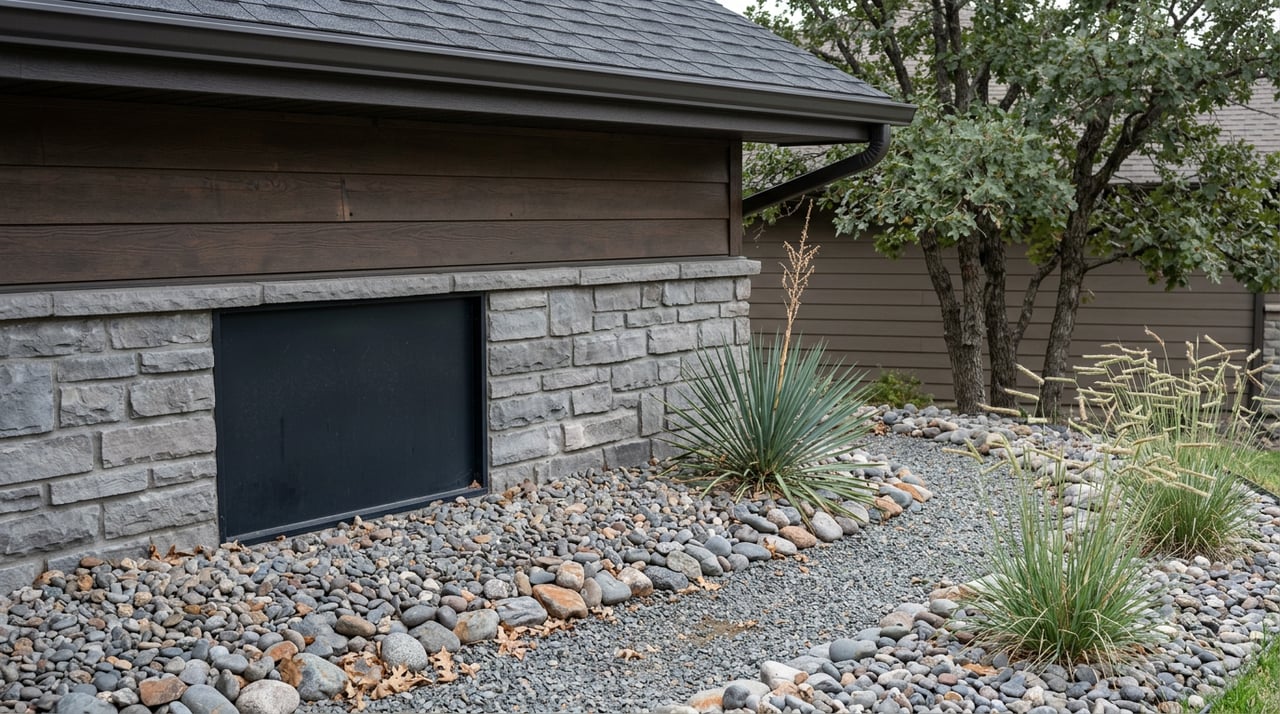
None of this exists in a vacuum. Woodland Park sits inside a mixed conifer forest, primarily ponderosa pine and Douglas fir, with a grass understory, and Teller County is more than half publicly owned, with Pike National Forest covering roughly 124,000 acres of it. Cured grass carries fire fast and low, which is exactly what delivers flame to the base of a tree and the base of a house. That is why local mitigation guidance puts so much weight on the first several feet around a structure rather than treating the whole lot the same way.
It also explains why burning your own slash is not a simple option here. Open burning is not permitted inside Woodland Park city limits at all, aside from small recreational fires under three feet. Outside the city, within the Northeast Teller County Fire Protection District, a burn permit requires a site inspection and comes with specific conditions: piles no larger than eight feet by eight feet by eight feet, limbs no thicker than six inches, one pile a day unless additional piles are approved in writing, a cap of 50 piles over the life of the permit, and everything extinguished by sunset. In practice, Teller County has spent recent seasons under Stage II fire bans that shut open burning down entirely, so most residents end up using the county slash site or hiring chipping and haul-off. One detail worth knowing if you are staying in the area after your sale: chipped material from that slash site feeds Woodland Park's wastewater treatment process, which produces a pathogen-free compost the city makes available free in limited quantities.
Pull your documentation before your sign goes in the yard, not after an offer comes in. Call your insurer and request your written risk score now under HB25-1182 rather than waiting for a buyer's agent to ask. If your mitigation work predates good record-keeping, a mitigation contractor can often assess and document current conditions retroactively, which at least gives you something dated to hand over.
It is also worth double-checking coverage limits while you are at it. A University of Colorado study found that three in four homes affected by the 2021 Marshall Fire were underinsured, their policies did not cover the full cost to rebuild. That is a different fire in a different county, but the lesson travels: a policy that looks fine on paper can still leave a rebuild short, and a buyer's lender may ask about replacement cost coverage during underwriting.
Does the Colorado Wildfire Resiliency Code apply to my Woodland Park home if I am not planning a renovation? Generally no. The code applies to new construction, additions or alterations over 500 square feet, and existing exterior walls or roofs when the repaired area exceeds 25 percent of the total. A home with no qualifying project underway is not required to make changes just because the code took effect.
Will a buyer's agent actually ask for my wildfire risk score? It is now a reasonable request. HB25-1182 gives any policyholder the right to see their insurer's written wildfire risk score and available mitigation discounts, and that information can factor into how a buyer's lender or insurer prices a policy on the same home after closing.
Does mitigation work I did years ago still count if I never kept documentation? It can still matter for safety, but it is harder to use as leverage without proof. A dated photo, a contractor invoice, or a formal assessment carries more weight with an insurer than an undocumented claim, so it is worth having a mitigation contractor document current conditions before you list if your original paperwork is gone.
If you are weighing a listing in Woodland Park and want help sorting out what your specific mitigation history is worth in this market, Blue Magnolia Homes can walk through it with you. Let's Connect.
Stay up to date on the latest real estate trends.
Get assistance in determining the current property value, crafting a competitive offer, writing and negotiating a contract, and much more. Contact me today.
GET IN TOUCH TO LEARN MORE

CHRISTINE WHITE
385 CORPORATE DR STE 301 COLORADO SPRINGS, CO 80919